01
build the base
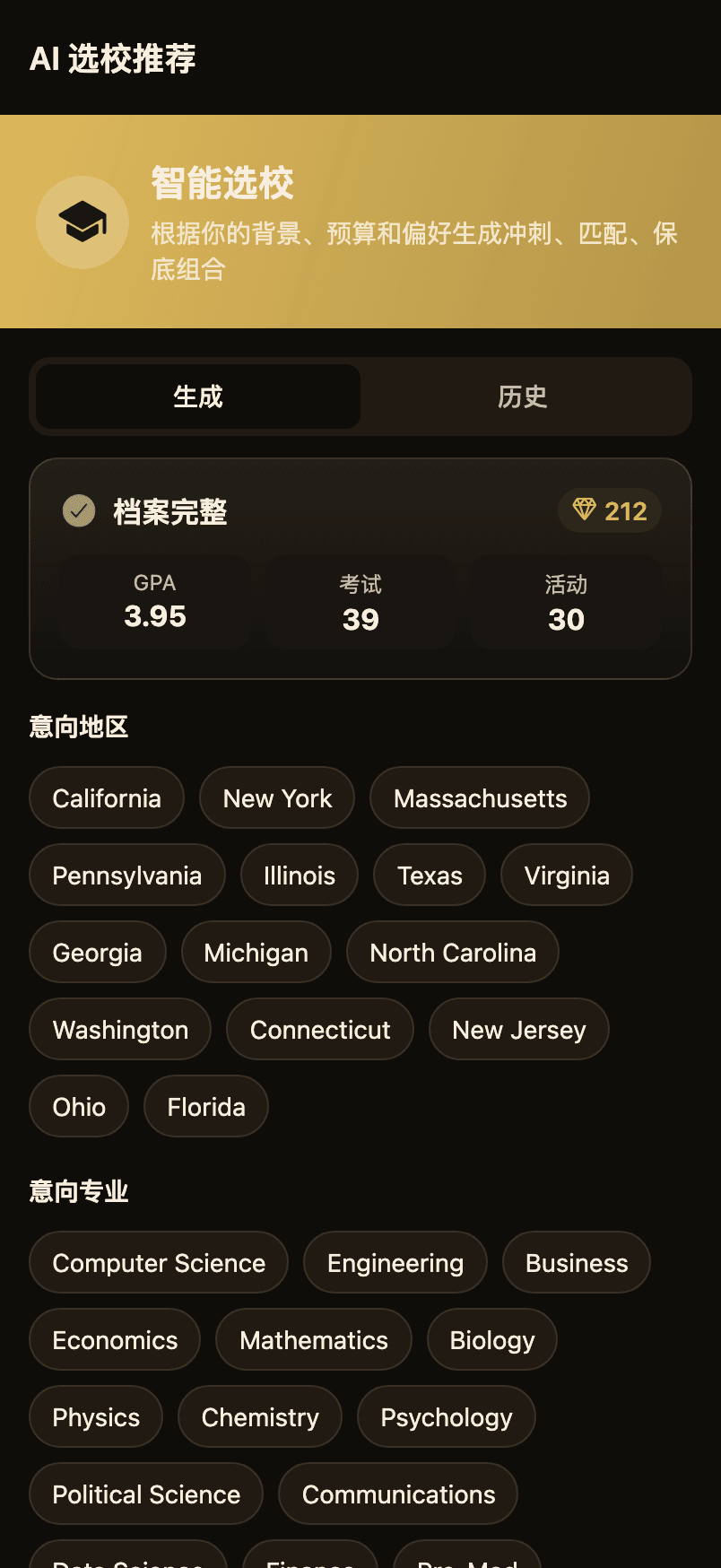
Enter application information
Capture grades, activities, interests, and goals in one profile used by every later decision.
The problem is not a lack of information. It is the lack of a system that can compare, explain, and move the next decision forward. Lumni turns the application into one clear workflow.

Build the profile, choose schools, understand strategy, and compare the full plan. Each step produces a clear result without forcing you across scattered sources.
Capture grades, activities, interests, and goals in one profile used by every later decision.
Research schools yourself or let AI shape reach, match, and safety options from the profile.
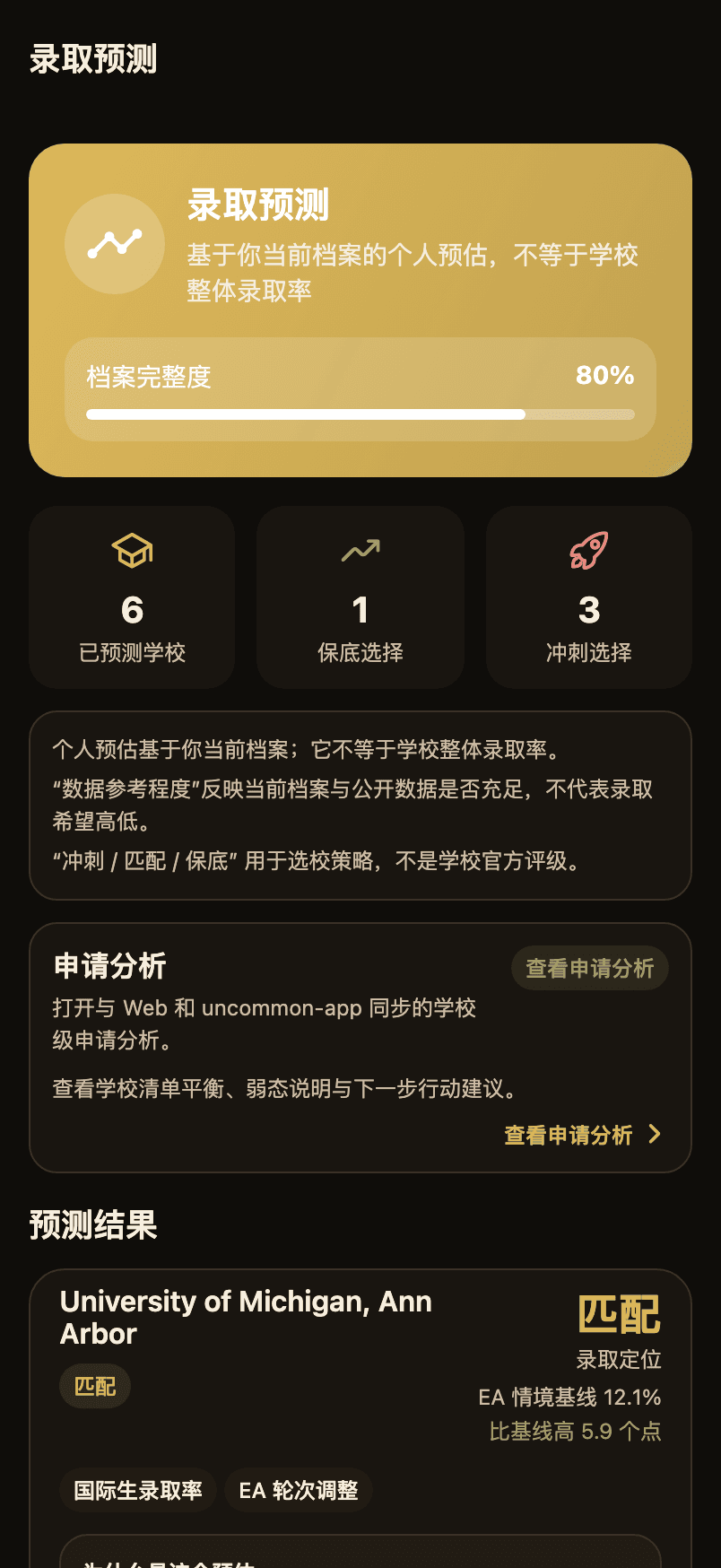
See how rounds, program fit, materials, and profile gaps change what should happen next.
Compare schools, majors, cost, probability, and workload before adjusting the overall list.
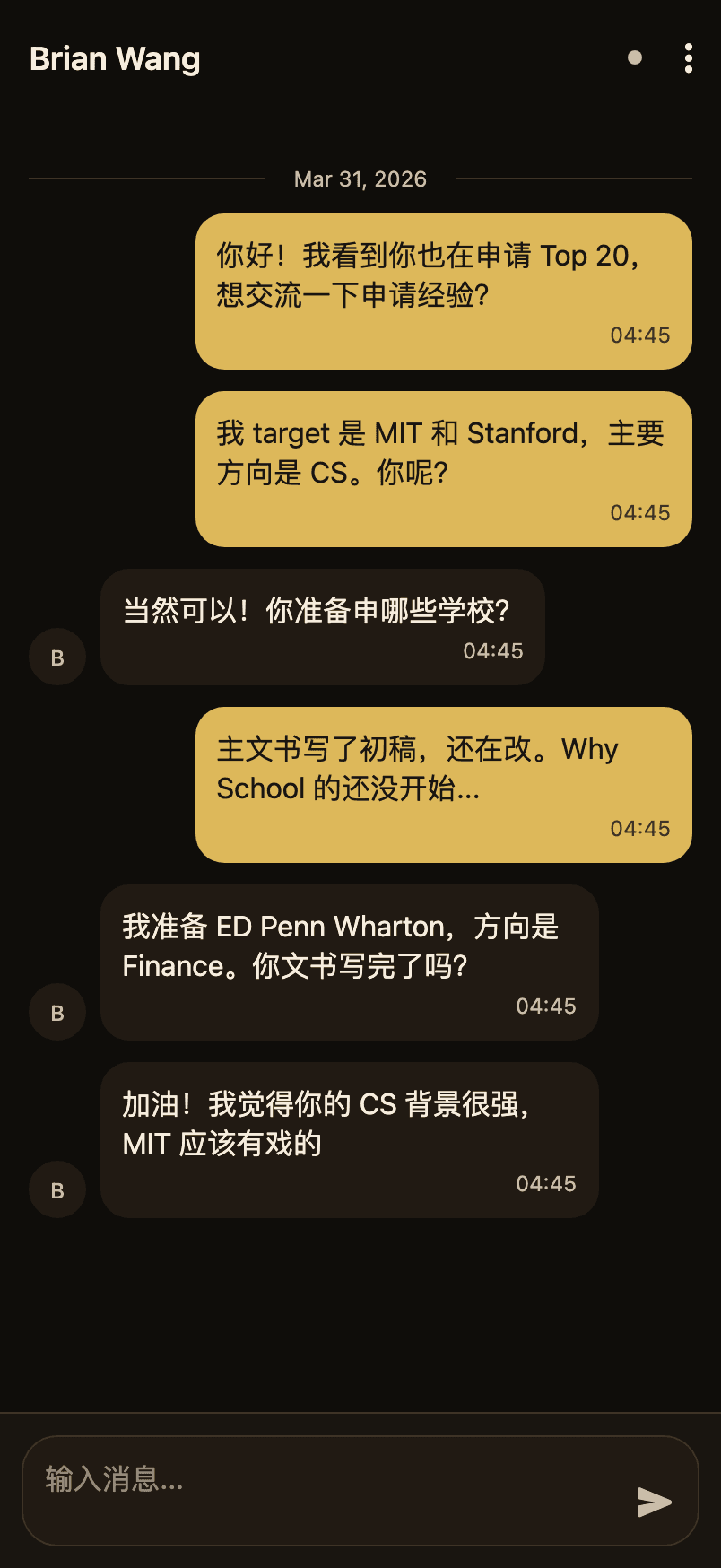
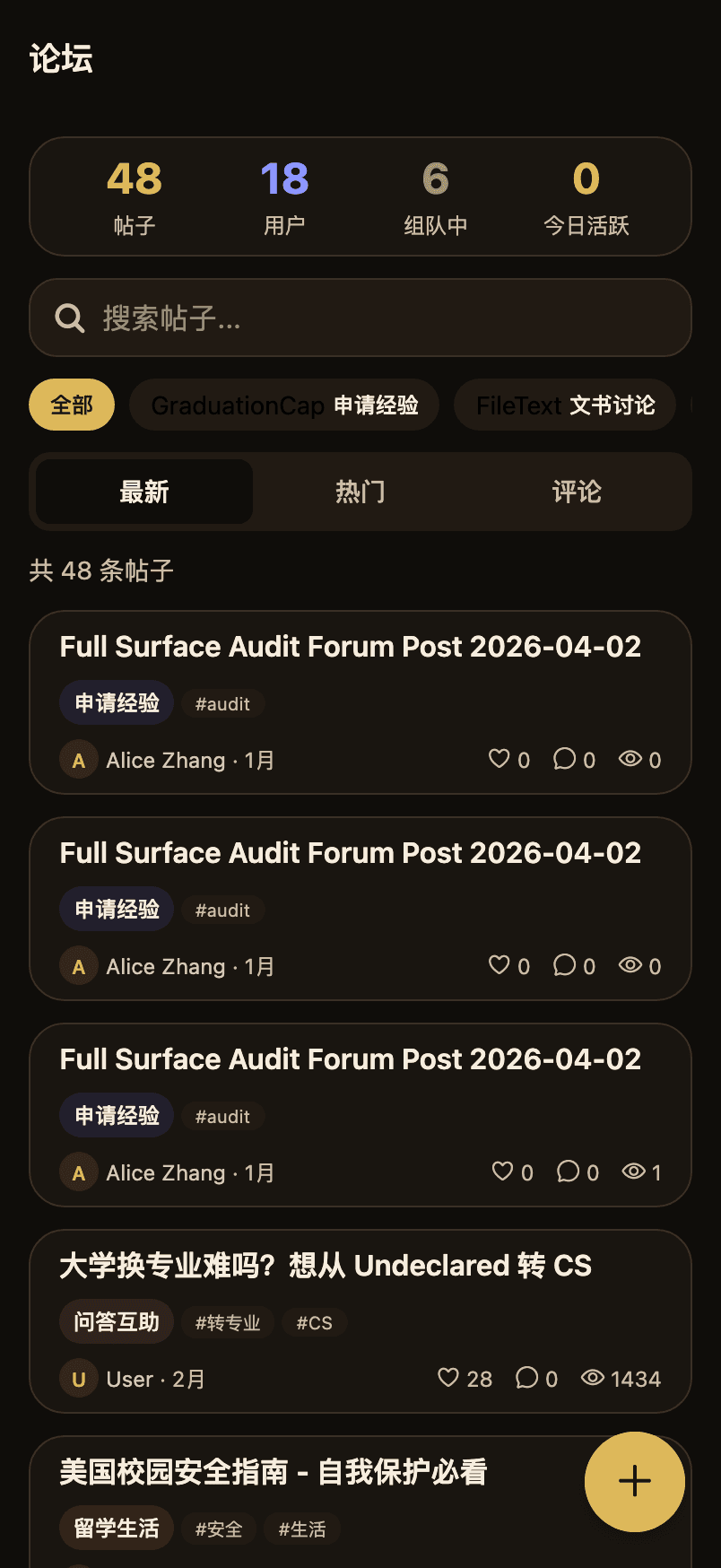
Use assessments, chat, teams, and the message board to find ideas and talk with applicants on a similar path.
A new application capability is in progress. Until launch, the workflow keeps the clue without inventing a promise.
Not a pile of tools. One coordinated workflow for school strategy, essays, planning, prediction, collaboration, and expert judgment.
From conversations and school lists to predictions, essays, and timelines, see how applicants turn uncertainty into the next action.
No borrowed numbers, no invented stories. Here is how the engine actually earns your trust.
Probability calibration is anchored to each school's officially published admit rates — not forum folklore or consultant instinct.
Every prediction ships as a probability band with its reasons and uncertainty spelled out. When the data is too thin, we say so instead of guessing.
Lists, essays, and timelines move faster with AI — while the irreversible decisions stay with human judgment.
School data carries provenance: rankings from five global systems, admissions figures traceable to where they were published.